Ukraine is launching strike-drones from everything – including Black Sea robo-boats
Defense News · 1 juillet 2026 · Anglais · collecté le 3 septembre 2026
Article original ↗ Archive PDF ⬇
MAGURA Sea Baby MAGURA V5 Sea Baby Baseline
Le Sea Baby du SBU devient plateforme de lancement de six à huit drones FPV logés dans des compartiments latéraux, aux côtés de roquettes thermobariques Shmel, d'après des comptes rendus russes autour de la flèche de Kinbourn. Rappel de la séparation des deux filières ukrainiennes : Sea Baby (SBU) et Magura (UFORCE pour le GUR). Les forces spéciales américaines ont coulé un navire-cible avec un Magura à Balikatan 2026 le 24 juin, première utilisation en Indo-Pacifique, UFORCE négociant des sites de production dans la région.
Sections
SearchSectionsSections
 Air WarfareLandNavalSpaceCyberOpens in new windowC4ISROpens in new windowPentagonCongressGlobalVideoThought Leadership
Search
Close
- Subscribe Now
- Air Warfare
- Land
- Naval
- Pentagon
-
CongressShow Congress sub sections
- CyberOpens in new window
- C4ISROpens in new window
- Space
- Training & Sim
- Unmanned
-
GlobalShow Global sub sections
- Europe
- Mideast Africa
- The Americas
-
IndustryShow Industry sub sections
- Top 100Opens in new window
- Interviews
- Opinion
-
VideoShow Video sub sections
- Money Minute
- Outlook
- Press Releases
-
Thought LeadershipShow Thought Leadership sub sections
- DSDs & SMRsOpens in new window
- WebcastsOpens in new window
- EventsOpens in new window
- NewslettersOpens in new window
- Events Calendar
- Native
- Early Bird Brief
- Digital EditionOpens in new window
[ ]
Featured:
2026 Strategic Architects List
Europe
Ukraine is launching strike-drones from everything – including Black Sea robo-boats
The Sea Baby’s new aerial-strike role is the latest front in an arms race Ukraine is exporting to the United States and NATO.
Wednesday, Jul 1, 2026

Ukrainian SBU operatives unveil an upgraded SeaBaby naval drone at an unspecified location in Ukraine, Oct. 17, 2025. (Vitalii Nosach/Global Images Ukraine via Getty Images)
KYIV, Ukraine — Ukraine has turned its signature naval drone – the little boat that drove Russia’s fleet out of the western Black Sea – into a launch platform for first-person-view attack drones, putting Kyiv’s strike reach beyond the coast.
The Sea Baby, a strike boat built and operated by Ukraine’s Security Service, or SBU, can now carry six to eight FPV drones in side compartments that open during an attack, alongside thermobaric Shmel rockets, according to Russian accounts of the boats operating around the Kinburn Spit, roughly 40 miles east of Odesa, shared by Forbes.
Ukrainian officials count on the autonomous vessels’ ability to move closer toward Russian military positions than land-based launchers could, with the SBU assuming a range of 930 miles (1,500 kilometers) on a 4,400-pound (2,000-kilogram) payload. Some of the drones in the cargo hold are guided by fiber-optic cable, leaving them immune to the radio jamming that downs ordinary FPVs, according to Forbes.
Ukraine has turned nearly everything it fields into an FPV launcher. Sea drones carrying fiber-optic FPVs struck the Russian ports of Tuapse and Novorossiysk in September. Several companies have rigged ground robots to fire the same drones, and both sides have flown balloons carrying them.
“The SBU became the first in the world to pioneer this new kind of naval warfare,” Brig. Gen. Ivan Lukashevych said at an unveiling of the Sea Baby’s latest generation in October 2025, “and we continue to advance it.”
Ukraine fields two distinct naval drone families.
The Sea Baby is developed and operated by the SBU, Ukraine’s domestic security service. The Magura – built by Uforce for the GUR, Ukraine’s military intelligence directorate – is a separate system with its own lineage and export path.
The Sea Baby is primarily remote-piloted from a mobile ground station but carries AI-assisted targeting and navigation systems that allow it to operate autonomously when communications are jammed or degraded – a design imperative born from Russia’s intense electronic warfare environment over the Black Sea.
American forces have begun using the boats themselves.
U.S. special forces sank a target ship with a Ukrainian Magura at the Balikatan 2026 exercise off the Philippines on June 24, the first use of the technology in the Indo-Pacific.
The interest is not one-off. A cheap, expendable boat that can carry a cluster of attack drones to within striking range is exactly the kind of weapon the United States is looking for as it prepares for a possible war with China across the Pacific’s vast distances.
“Magura’s successes on the Ukrainian-Russian front confirm their value for use in the Indo-Pacific region,” Oleg Roginsky, chief executive of Uforce, the London-based startup that makes the Magura, told Bloomberg last week.
Uforce is in talks with Indo-Pacific buyers and weighing at least two production sites in the region, Roginsky said. Ukraine barred weapons exports in 2022 to keep its arms at the front, and only began opening that market in 2025.
Ukrainian naval drones have sunk or damaged roughly a dozen Russian warships since 2022 and forced the Black Sea Fleet to pull its main operations back to Novorossiysk, the U.S. Naval Institute reported in September.
Each boat costs a few hundred thousand dollars, below the price of a single modern torpedo.
The Pentagon is studying the lesson as it shifts focus toward a possible conflict with China.
The U.S. Navy expects to field thousands of small uncrewed surface vessels across the Indo-Pacific by 2030, Capt. Garrett Miller, who leads its Surface Development Group One, said at a Navy symposium on April 20, as reported by USNI News.
In a report last July, the Center for Strategic and International Studies urged the U.S. military to copy Kyiv’s acquisition methods, arguing that “unlike theoretical models or peacetime pilots, Ukraine’s innovations in defense acquisition are battlefield tested.”
And Ukraine has continued to innovate. Its Sub Sea Baby underwater drone struck an Improved Kilo-class submarine at its pier in Novorossiysk on Dec. 15, the first time an unmanned underwater vehicle has hit a submarine in port, the SBU said.
Russia denied any damage, but satellite imagery taken the following day showed a 9-meter crater in the pier, the submarine visibly lower in the water, and the vessel, later identified as the B-271 Kolpino, unmoved at its berth more than a month later. Ukrainian and independent analysts assessed it as a mission kill.
NATO is already training with Kyiv’s tactics, too.
Ukraine’s navy led a NATO red team and beat the alliance’s blue force in all five scenarios at the REPMUS naval-drone exercise in Portugal in September, the first time it had run the opposing force.
About Katie Livingstone
Katie Livingstone is the Ukraine correspondent for Defense News and Military Times. Based in Kyiv, she has covered Russia's full-scale invasion since its first days. She is a former Fulbright fellow whose award-winning work has appeared in outlets across Europe and the U.S.
Share:
More In Europe
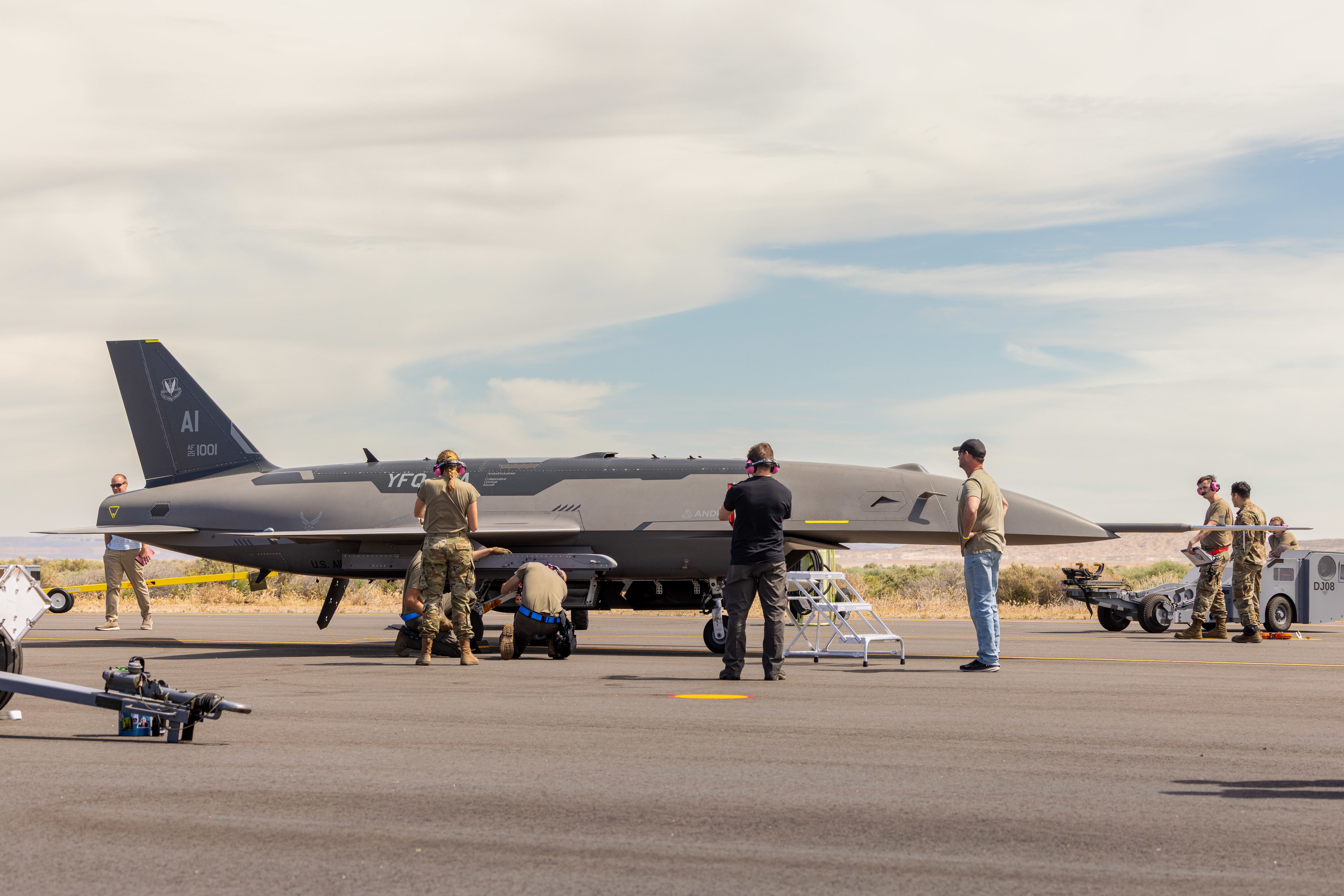
Trust between operators, CCAs starts with simulations: Former Air Force secretary
Simulations and exercises will be key to boosting trust between operators and CCAs, according to former U.S. Air Force secretary Frank Kendall.

Celebrating 40 years of Defense News
Since 1986, Defense News has been the authoritative voice for the world's defense decision-makers.
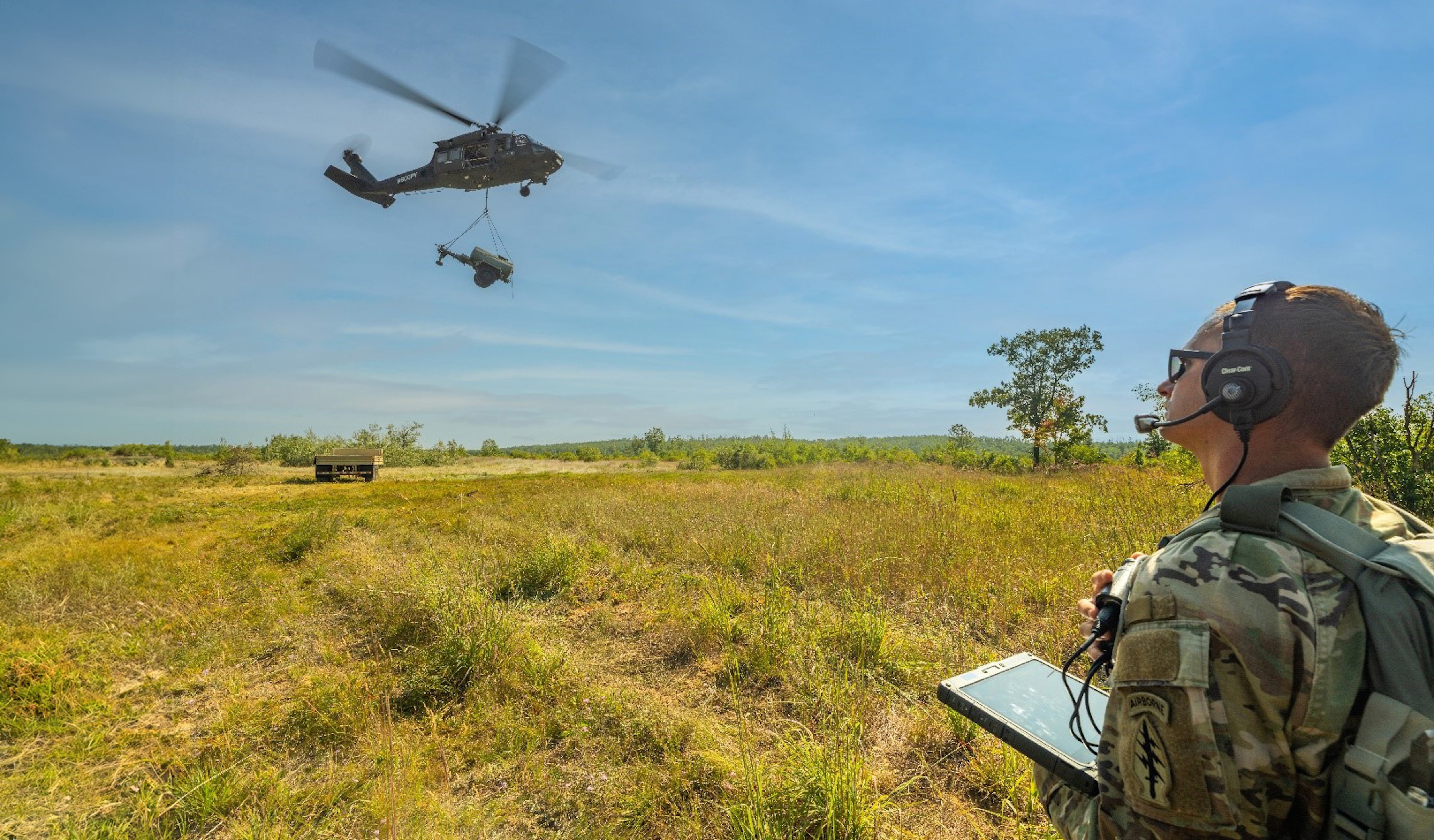
Guardsman learns to fly autonomous Black Hawk in less than an hour
In a training first, an Army National Guardsman used a tablet to control Sikorsky's optionally piloted Black Hawk and plan its task during an exercise.
Recap: Highlights from the US Army’s 2025 conference in Washington
The Army continues to transform, with efforts focused on next-gen weaponry, long-range artillery, unmanned systems and much more.

Pentagon stages first ‘Top Drone’ school for operators to hone skills
Industry and military drone operators flew tethered and untethered first-person drones through a course designed to test endurance and maneuverability.
Featured Video
Monument in DC honors 41 million service members | Defense News Weekly Full Episode 9.1.26

When to Consider a Financial Advisor | Money Minute

Digging into the Taking Care of America’s Veterans Act | MOAA Headlines

How can the government help the defense industry produce more missiles?
Trending Now
-
American Rheinmetall delivers its first prototype to replace Bradley Fighting Vehicle
-
USS Abraham Lincoln’s visit to Thailand lifts hope and sex-tourism risk
-
Lockheed Martin, General Dynamics get framework deals to surge Patriot, THAAD production
-
US approves possible $800 million military helicopter sale to Iraq
-
New Zealand ground forces drill to dock onto larger armies
Facebook pageTwitter feedRSS feed
Defense News © 2026
Terms of Use
Get Us
- Subscribe Now
- NewslettersOpens in new window
- EventsOpens in new window
- RSS FeedsOpens in new window
- Shop MerchOpens in new window
Contact Us
About Us